Who’s Your Neighbor? The Samaritan Question Confronting the American Church
A Biblical Reflection on Culture, Race, Immigration and the Call to Love Our Neighbor
The deepest divide in many American churches today is not over the Trinity, the resurrection, or the authority of Scripture. It is often over culture, politics, race, immigration, and identity. We have reached a moment where believers who agree on the Apostles' Creed can become enemies because they disagree on cultural issues. This raises a painful but necessary question: Can we truly say we love God while harboring hatred toward people who look different, speak differently, or come from another nation?
I have sat with pastors who are exhausted. Not from preaching or counseling or hospital visits, but from navigating the landmines that cultural warfare has buried inside their congregations. I have heard from church members who no longer feel safe in their own sanctuaries, not because of theological conflict, but because the rhetoric of cultural hostility has seeped through the stained glass. Something has gone deeply wrong, and the Body of Christ must be honest enough to name it.

When Culture Becomes More Important Than Christ
There has always been a distinction between the theology of the church and the culture of the church. Historic Christian doctrine, the nature of God, the atoning work of Christ, the authority of Scripture, the resurrection, the coming Kingdom, these are the load-bearing walls of our faith. But in recent decades, something troubling has occurred: many believers have come to defend their political positions, their national identity, and their cultural preferences with far more passion than they defend the actual teachings of Jesus.
This is what some theologians and cultural observers call "cultural Christianity", a version of faith that wraps the gospel in the flag of a particular nation, race, or political movement until it becomes difficult to tell where Christ ends and culture begins. When that happens, the church stops being the prophetic voice of the Kingdom and becomes merely the chaplain of a social tribe.
The danger is not that Christians hold political opinions. The danger is when those opinions become the lens through which we read Scripture, rather than allowing Scripture to be the lens through which we evaluate our opinions. When a believer is more outraged by immigration policy debates than by the image of God in every human being walking across any border, culture has replaced the gospel as the supreme authority.
The Good Samaritan and the Question of the Neighbor
In Luke 10:25–37, a religious lawyer approached Jesus with what he believed was a clarifying question: "Who is my neighbor?" He had already affirmed the great commandment, love God, love your neighbor, but he wanted limits. He wanted Jesus to draw a circle small enough to be manageable, to confirm that neighbor meant people like us.
Jesus refused. Instead, He told a story.
A Jewish man is beaten, robbed, and left for dead on the road to Jericho. A priest passes by. A Levite passes by. Both men of religious credential, cultural familiarity, ethnic solidarity. Both cross to the other side. Then comes the one no one expected: a Samaritan.
The audience would have felt this deeply. Jews and Samaritans shared a history of contempt. Samaritans were considered ethnically impure, theologically suspect, socially inferior. They were the outsiders, the half-breeds, the ones respectable people avoided. Yet Jesus chose this man, this culturally despised, ethnically marginalized outsider, as the model of what it looks like to love your neighbor.
The Samaritan bound the man's wounds. He put him on his own animal. He paid for his lodging and promised to return. He crossed every cultural boundary that his world told him to honor.
Then Jesus turned the question back on the lawyer, and back on us: "Which of these three do you think was a neighbor to the man who fell into the hands of robbers?"
The lawyer could not even say the word "Samaritan." He simply said, "The one who had mercy on him."
Jesus said, "Go and do likewise."

Can Hatred Coexist with Genuine Love for God?
The Apostle John did not mince words. In 1 John 4:20–21, he wrote: "Whoever claims to love God yet hates a brother or sister is a liar. For whoever does not love their brother and sister, whom they have seen, cannot love God, whom they have not seen."
That word liar is not rhetorical flourish. It is a theological declaration: hatred toward a fellow human being and genuine love for God cannot coexist in the same heart. One will always expose the falsehood of the other.
Racial prejudice is not a political opinion. Xenophobia is not a cultural preference. Dehumanization, treating a person made in the image of God as less than fully human because of their skin color, nationality, language, or immigration status, is a theological error. It is a denial of the Imago Dei. And no amount of church attendance, doctrinal precision, or worship music can sanctify it.
This is the test of genuine faith: not what we say we believe on Sunday morning, but how we treat the person we have been culturally conditioned to fear or despise on every other day of the week.

The Church's Witness in a Divided Nation
History will record this moment. Future generations will look back at this season of American Christianity and ask a simple question: What did the church do?
Jesus was not a man who stayed within comfortable cultural boundaries. He spoke to the Samaritan woman at the well, crossing lines of gender, race, and religious tradition in a single conversation. He healed the Roman centurion's servant, the representative of an occupying empire. He called a despised tax collector to be His disciple. He touched lepers. He welcomed children. He sat at tables with sinners.
Every person Jesus encountered who had been told they didn't belong, that they were too foreign, too broken, too "other", Jesus moved toward them.
If the church is going to be the Body of Christ in a divided nation, then the church must move toward people the way Christ moved. Not with naive politics or sentimental tolerance, but with deliberate, costly, Christlike love. The kind of love that binds wounds. The kind that pays the bill. The kind that says, I will come back for you.
The witness of the church in America is at stake, not because of which political party wins an election, but because of whether the watching world can look at us and see anything that resembles Jesus.

A Call to Love Beyond Boundaries
So who are the Samaritans of modern America?
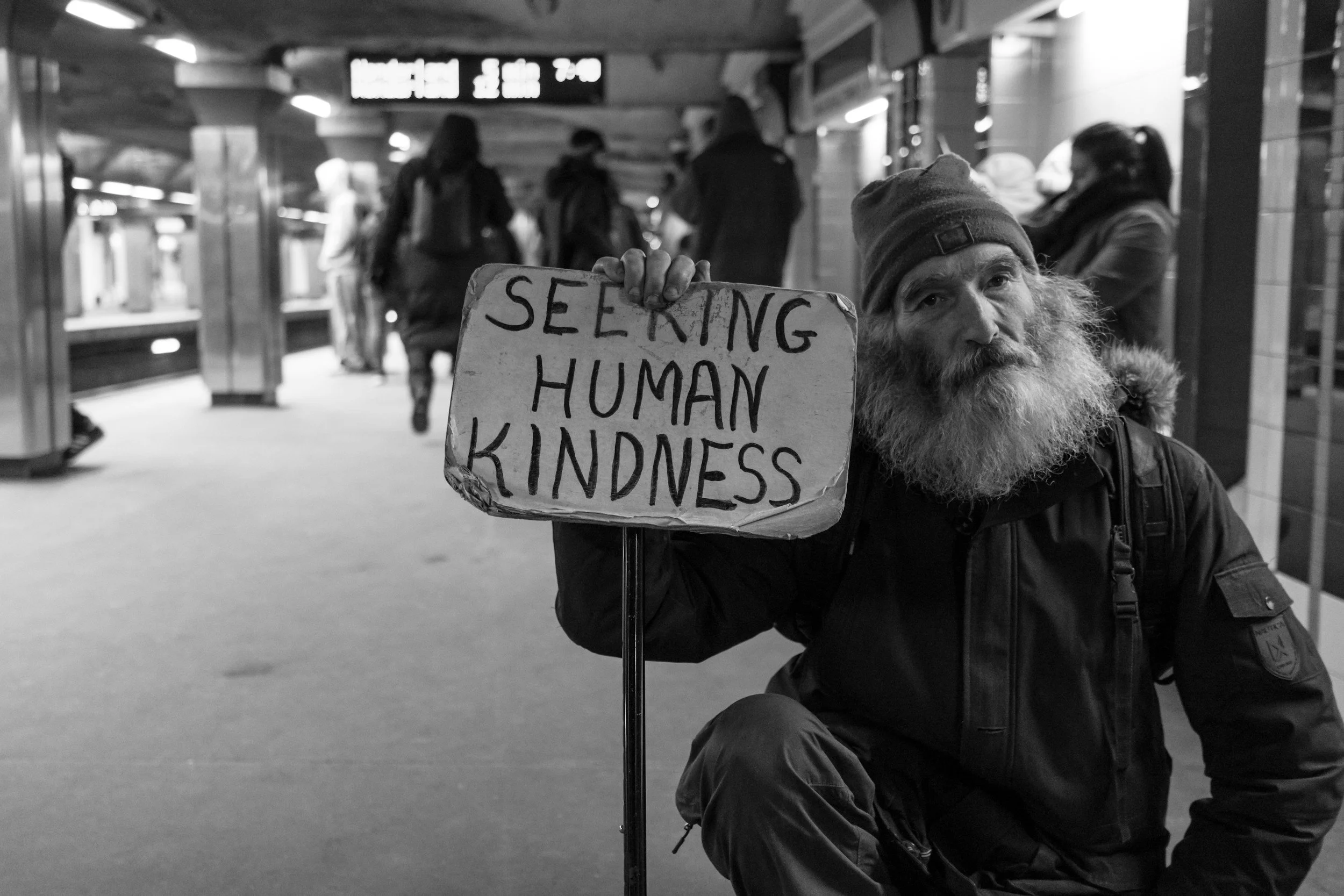
They are the immigrant family who fled violence and crossed a border carrying their children and nothing else. They are the refugee resettled in your city who sits in your grocery store parking lot trying to read an English label. They are the person of a different race who worships Christ in a church across town but whom you have never invited to your table. They are the political opponent you have been trained to see as an enemy rather than as a neighbor. They are the homeless man your congregation drives past every Sunday on the way to services.
They are not abstract social issues. They are human beings. They bear the image of God. And Jesus is asking us, right now, the same question He asked that lawyer two thousand years ago.
Which of these will you be a neighbor to?
This is not a political call. This is not a progressive agenda or a conservative counter-agenda. This is the oldest teaching of the faith, reiterated by Jesus in the plainest possible terms. Love your neighbor. And your neighbor, Jesus made clear, is whoever needs you, especially the one your culture told you to ignore.
Rediscovering the Heart of Jesus
When the lawyer asked Jesus, "Who is my neighbor?" he was looking for a limit to love. Jesus responded by removing the limit. The question is no longer, "Who qualifies to be my neighbor?" The real question is, "Am I willing to be a neighbor to those I have been taught to distrust?"
Before we ask whether someone else is a good Samaritan, we must ask ourselves: Who is my Samaritan? Who have I excluded from my compassion? And what would Jesus say about the condition of my heart?
The church does not need another culture war. It needs a revival of conscience, a deep, Spirit-led reckoning with the gap between what we claim to believe and how we actually treat people. It needs pastors and leaders willing to say from their pulpits what Jesus said plainly in the road to Jericho: There are no limits to who your neighbor is.
The gospel is not a tribal document. It is not the property of any nation, any race, any political party, or any culture. It is the announcement that God so loved the world, not a nation, not a demographic, not a preferred constituency, the world, that He gave His only Son.
If we love God, we will love what God loves. And God loves every human being walking this earth.
The Samaritan question is still being asked. The road to Jericho is still full of people who have been beaten and left for dead. The only question that remains is whether the church will be the one that crosses to the other side, or the one that stops, bends down, and pours out the oil of mercy.
Go and do likewise.
Dr. Kevin S. Hairston